
The Rise of AI-Powered Marketing: How Artificial Intelligence Is Transforming Digital Strategies in 2025
The digital marketing world is evolving faster than ever, and in 2025 the biggest game-changer is Artificial Intelligence (AI). From content creation to customer service, advertising to analytics—AI is reshaping how brands connect with audiences. What used to take hours can now be done in minutes, and what was once impossible is now standard practice. Marketers who understand and adopt AI tools early are gaining a huge competitive advantage.
AI-Powered Marketing: The Future of Digital Growth in 2025
1. AI in Content Creation and Personalization
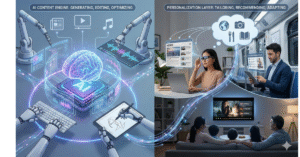
One of the biggest revolutions in 2025 is happening in content creation. With AI tools like modern large language models and creative platforms, marketers can create blogs, captions, videos, and graphics faster and with higher quality. The real magic is personalization. AI allows brands to understand what each user wants and deliver customized content at scale.
AI is used for:
- Personalized email subject lines
- Tailored product recommendations
- Auto-generated ad copies
- Personalized landing pages
- Dynamic website content
2. AI in Social Media Marketing
Social media is more competitive than ever. With declining organic reach and increasing demand for short-form content, brands are turning to AI for help. Trending AI features include reel and short-form video generators, automated posting & scheduling, growth prediction tools, influencer matchmaking, and trend analysis tools that suggest the best content strategies.
AI tools analyze audience behavior, post timing, content style, and trending topics to suggest what type of content will perform best. Brands using AI video tools can produce significantly more short-form content and stay consistently visible.
3. AI in SEO and Search Optimization
SEO has shifted its priorities toward human-first content, search intent, topical authority, and E-E-A-T (Experience, Expertise, Authoritativeness, Trustworthiness). AI helps marketers create optimized content faster while analyzing SERPs, competitor data, and user intent to suggest the best keyword strategies.
Key uses:
- Keyword research
- Competitor analysis
- SERP predictions
- Optimized content outlines
- Voice search optimization
- Internal linking suggestions
A new trend is optimizing for AI-driven answer engines — preparing content to be directly consumed by AI assistants and answer services.
4. AI in Paid Advertising (Meta Ads + Google Ads)
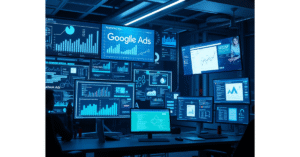
Paid advertising is becoming more accurate and profitable because of AI. Systems now predict which creatives and audiences will perform best, auto-optimize budgets, and lower costs per conversion. AI learns from millions of data points — behavior, browsing patterns, purchase history, and engagement signals — to find users who are most likely to act.
In 2025, AI-generated ad creatives (videos, headlines, product demos) are mainstream, enabling advertisers to iterate faster and reduce creative spend.
5. AI in Customer Support & Automation
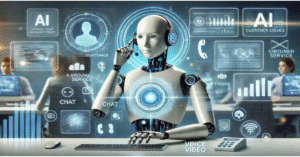
Customer expectations are rising, and brands rely heavily on AI chatbots and automation tools that handle FAQs, order support, lead nurturing, appointment booking, and follow-ups. Modern AI chatbots can handle a large portion of inbound queries, freeing human teams to manage complex cases and strategy.
6. Predictive Analytics: AI’s Strongest Power
AI not only reacts — it predicts. Predictive analytics help businesses forecast customer needs, buying windows, product preferences, pricing sensitivity, and content affinity. This predictive power enables smarter campaign planning, inventory management, and budget allocation.
Popular applications include predicting sales trends, forecasting ad performance, identifying upcoming cultural or product trends, mapping customer journeys, and spotting churn risks early.
7. AI in E-Commerce Marketing

In e-commerce, AI drives essential improvements: auto-generated product descriptions, dynamic pricing based on demand, chatbots for product queries, personalized recommendations, and smart retargeting ads. A notable trend is virtual try-on tools for clothes, accessories, and cosmetics — increasing buyer confidence and conversion rates.
8. AI for Brand Building & Reputation Management
Brands use AI to monitor mentions across social media, news, forums, and review platforms. Sentiment analysis, alerting systems, and reputation dashboards ensure brands can respond quickly to emerging issues and track long-term brand health compared to competitors.
Benefits of AI in Digital Marketing
- Faster content creation
- Higher engagement
- Lower marketing costs
- Better customer targeting
- Improved ROI
- Accurate data analysis
- Better user experience
- Automated workflows
- Stronger personalization
AI helps small businesses compete with big brands by giving them access to productivity-boosting tools without huge budgets.
Challenges of AI in Digital Marketing
Despite its advantages, AI brings challenges: over-dependence on automation, risk of generic content, data privacy concerns, possible erosion of human creativity, and misinterpretation of trends. The best outcomes come when AI efficiency is blended with human strategy and creative oversight.
Conclusion
AI-powered marketing is no longer a future trend — it is the present reality in 2025. From content creation and SEO to ads, e-commerce, and customer support, AI is reshaping every part of digital marketing. Businesses that adopt AI thoughtfully and combine it with human creativity will grow faster and engage audiences more effectively. To win in today’s landscape, AI is not optional — it’s a strategic necessity.